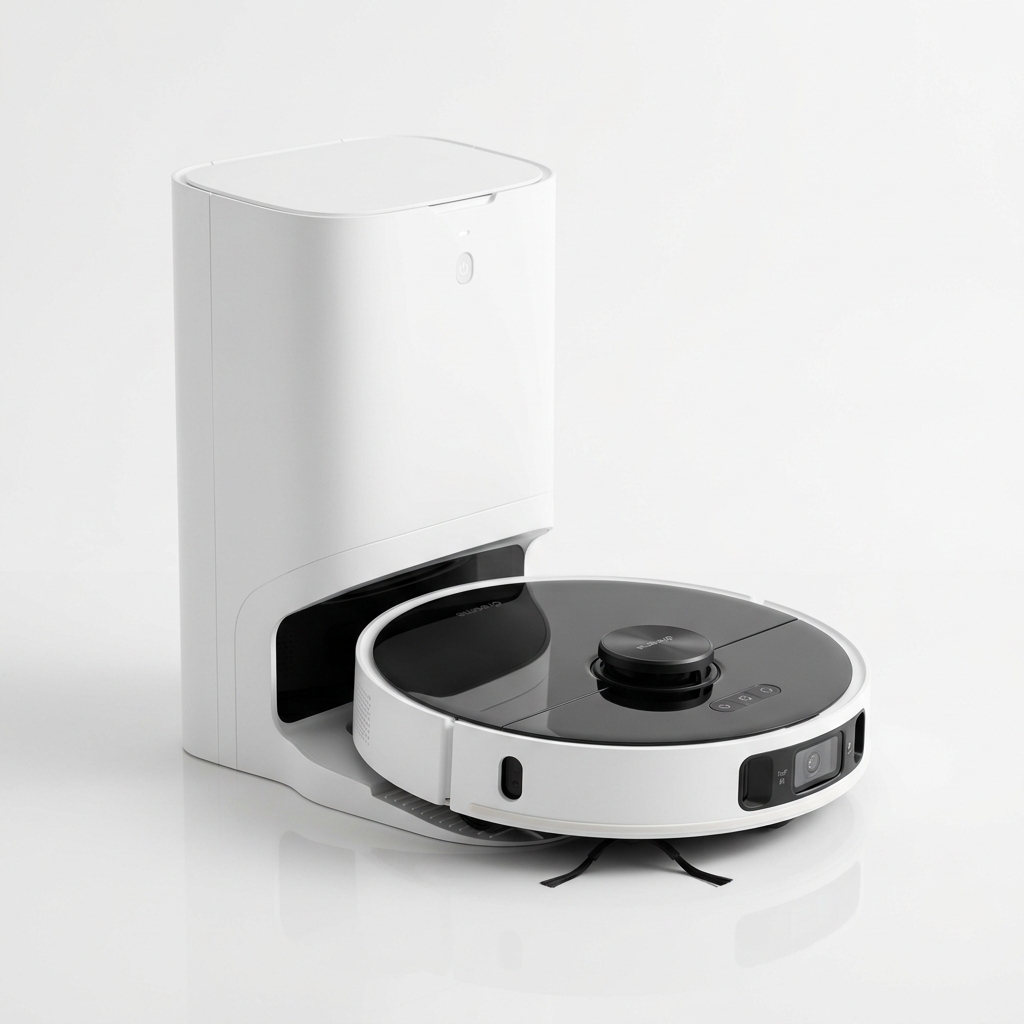
Dreame
★ 4.6
Dreame D10 Plus Gen 2
Best Value Robot Vacuum with 6000Pa Suction
₹27,999
90-Day Self-Emptying (4L Bag)
6000Pa Vormax Suction
LiDAR Navigation
Key factors for choosing a robot vacuum for large Indian homes: battery runtime, auto-recharge, self-emptying stations, multi-floor mapping, and coverage.
Large Indian homes — whether sprawling independent houses, farmhouses, or spacious apartments exceeding 2000 square feet — present unique challenges for robot vacuum cleaners. A compact robot vacuum designed for a 1-bedroom flat may run out of battery before finishing half the ground floor, get confused by multiple rooms and levels, or fill its dustbin before coverage is complete. Choosing the right robot vacuum for a large home requires careful consideration of battery runtime, navigation efficiency, dustbin capacity, and features like auto-recharge and resume, multi-floor mapping, and self-emptying stations. This guide examines each of these factors in detail, helping owners of larger properties make an informed decision. We focus on practical considerations for Indian homes, including common floor plan types, typical furniture layouts, and the specific brands and models available in the Indian market.
A “large home” in the Indian context typically means 2000 square feet or more of built-up area. This can be a single-level layout (common in independent houses and villas) or multi-level (duplex apartments, townhouses, or bungalows with two or three floors). The actual floor area that needs cleaning is usually less than the built-up area — walls, furniture, and fixed installations reduce the navigable space. A reasonable estimate is that 70–80% of the built-up area is accessible floor space.
For a 2500-square-foot home, that means roughly 1750–2000 square feet of actual cleaning area. This is significant because most entry-level robot vacuums are rated for homes up to 1500–1800 square feet on a single charge. A vacuum that works well in a 1200-square-foot apartment may struggle to complete a single cleaning cycle in a larger space.
Coverage requirements also depend on cleaning frequency. If you run the vacuum daily, it does not need to cover the entire home in one session. You can schedule different zones on different days. However, if you prefer a full-home clean in one go, the vacuum’s battery and dustbin capacity must match the total area.
Battery capacity is measured in milliamp-hours (mAh) and directly determines how long the vacuum can run before needing to recharge. Typical capacities range from 2500 mAh in budget models to 5200 mAh or more in premium models.
Estimated runtime by capacity:
These estimates assume standard suction mode without mopping. Using max suction mode can reduce runtime by 40–50%. Mopping also consumes additional power and water, which may require refilling mid-cycle.
For a 2500-square-foot home, look for a vacuum with at least 4400 mAh battery capacity. This ensures the vacuum can complete a full cleaning cycle without needing to recharge mid-run. If you plan to use max suction or mopping, consider a 5200 mAh model or one with auto-recharge and resume.
Battery technology in robot vacuums is typically lithium-ion. These batteries degrade over time — after 500–800 charge cycles, expect runtime to reduce by 20–30%. This means a vacuum that covers your home comfortably when new may struggle after 2–3 years of regular use. Planning for this by choosing a model with replaceable batteries or higher initial capacity is wise.
For large homes where battery capacity alone may not be sufficient, auto-recharge and resume is a critical feature. Here is how it works:
This feature effectively removes battery constraints for large homes. A vacuum with a smaller battery but auto-recharge and resume can clean an arbitrarily large area, as long as it has enough runtime to return to the dock. However, the process adds time — recharging to 80% can take 3–5 hours depending on the battery size. A full-home clean that would take 2 hours on paper may take 5–6 hours with a mid-run recharge.
Some premium models offer fast-charging batteries that reach 80% in 2–3 hours, reducing the total cleaning time. Others allow partial charge resume — the vacuum resumes cleaning after reaching a user-defined battery level rather than waiting for a full charge.
Auto-recharge and resume is available on many mid-range and premium models from Roborock, Dreame, and Xiaomi. Budget models generally do not include this feature. Check the specifications carefully — some models advertise “auto-recharge” but only return to dock without resuming cleaning. The resume function is what makes the feature useful for large homes.
A self-emptying station, also called an auto-empty dock, is a dock that automatically sucks debris from the vacuum’s dustbin into a larger bag or container in the dock. This allows the vacuum to operate for weeks without manual dustbin emptying.
Why it matters for large homes. A standard robot vacuum dustbin holds 300–600 ml of debris. In a 2500-square-foot home, the dustbin may fill up mid-cleaning, especially if there are carpets, pets, or high foot traffic. When the dustbin is full, suction drops, and cleaning effectiveness decreases. Some vacuums continue cleaning with reduced performance; others stop and alert the user to empty the bin.
A self-emptying station solves this by emptying the bin automatically each time the vacuum docks. The dock’s bag or container typically holds 2–4 litres of debris — enough for 30–60 days of cleaning, depending on usage. For large homes, this means the vacuum can complete full cleaning cycles without interruption.
Dock size consideration. Self-emptying stations are larger than standard docks. They require additional floor space and are typically 40–50 cm tall. Ensure the dock location has enough clearance, both for the larger base and for the vacuum to approach and dock. Indian homes with built-in cabinets or furniture alcoves may need to plan the dock placement carefully.
Bag costs. The self-emptying station uses disposable bags that need replacement every 1–2 months. Bag costs range from ₹400–₹900 for a pack of 3–6 bags, depending on the brand. This is an ongoing expense to consider when choosing a self-emptying model.
Models with self-emptying stations. Several models available in India offer self-emptying options, including the Dreame D10 Plus, Roborock S7 Max Ultra, and some Xiaomi variants. These models are typically priced above ₹35,000.
Even without a self-emptying station, dustbin size matters. Standard dustbin capacities range from 250 ml to 600 ml. For large homes, aim for at least 400 ml.
250–350 ml. Suitable for small apartments under 1000 square feet with minimal debris. Will need emptying mid-cycle in larger homes.
400–500 ml. Suitable for homes up to 2000 square feet with daily cleaning. May fill up in a single run if there is heavy debris, pet hair, or if it has been a few days since the last clean.
500–600 ml. Suitable for homes exceeding 2000 square feet. Less frequent emptying needed.
Some vacuums display dustbin status in the app, so you can check if it needs emptying without looking at the physical bin. This is a useful feature for large homes where the vacuum may be on a different floor.
If your large home spans multiple floors, multi-floor mapping is essential. Without it, the vacuum stores only one map. When you move it to another floor, it tries to navigate based on the wrong layout, resulting in confusion and inefficient cleaning.
How multi-floor mapping works. The vacuum stores up to 3–5 floor plans in its memory. When placed on a different floor, it recognises the unique LiDAR signature of that space and loads the corresponding map automatically. Some models require you to manually switch maps in the app, while newer models detect the floor automatically.
Setting up multi-floor maps. For each floor, you run a full mapping cycle. The app saves each map separately. You label rooms, set no-go zones, and configure cleaning preferences independently for each floor. This allows different schedules — for example, clean the ground floor daily and the first floor every other day.
Considerations for multi-floor use. The vacuum cannot move between floors on its own — it needs to be carried. Some users keep one vacuum per floor for convenience. Others carry a single vacuum between levels. If you plan to carry the vacuum, ensure it is lightweight enough for comfortable handling. Most robot vacuums weigh 3–5 kg. The dock stays on the main floor; you charge the vacuum between floor changes.
Brands with reliable multi-floor mapping. Roborock, Dreame, and newer Xiaomi models offer robust multi-floor support. Check the number of stored maps — some budget models save only 1–2 maps, while premium models save up to 5.
Navigation efficiency determines how well the vacuum covers large areas. Random-bounce navigation is unsuitable for large homes. Systematic navigation — LiDAR or vSLAM with SLAM algorithms — is necessary.
Coverage patterns. LiDAR-guided vacuums clean in straight, parallel lines. They calculate the most efficient route to cover every accessible area. This reduces cleaning time by 30–50% compared to random navigation and ensures complete coverage. For a 2500-square-foot home, an efficient LiDAR vacuum may finish in 90–120 minutes on standard suction, while a random-navigation vacuum could take 3–4 hours and still miss areas.
Obstacle handling. Large homes have more furniture and obstacles. Efficient vacuums navigate around obstacles without getting stuck. Features like front-facing obstacle avoidance cameras (available on some premium models) help identify and avoid cables, slippers, and pet toys.
Edge cleaning. Corner and edge cleaning are important in large rooms with many walls. Look for models with side brushes that extend to sweep debris from edges into the main cleaning path.
Threshold climbing. Large Indian homes may have transitions between tile and carpet, or small thresholds between rooms. Check the vacuum’s threshold climbing height — most can handle 1.5–2 cm. Some premium models manage up to 2.5 cm, which is useful for Indian-style bathroom thresholds.
When evaluating specific models for large homes, consider the following parameters:
Battery and runtime. Prioritise models with 4400 mAh or higher battery capacity or confirmed auto-recharge and resume capability. The Dreame D10 Plus (5200 mAh) and Roborock S7 Max Ultra (5200 mAh) are strong candidates for very large homes.
Navigation system. LiDAR navigation is strongly recommended over gyroscope systems for large homes. The systematic cleaning pattern and persistent map significantly improve coverage and efficiency.
Self-emptying station. For homes above 2500 square feet, a self-emptying station reduces maintenance frequency. Without it, you may need to empty the dustbin mid-cycle or daily.
Multi-floor capability. If the home spans multiple levels, confirm the model supports at least 3 stored maps and automatic map recognition.
App features. Look for apps that support zone cleaning, room-specific scheduling, no-go zones, and cleaning history. These features help manage large spaces efficiently.
Service availability. For large homes, the vacuum will run frequently. Service centre availability in your city is important. Brands like Xiaomi, Eureka Forbes, and Samsung have wide service networks across India. Roborock and Dreame have growing service presence in major cities.
Price range. For large home suitability, expect to spend ₹25,000–₹60,000. Budget models under ₹20,000 generally lack the battery capacity, navigation quality, and features needed for homes above 2000 square feet.
Underestimating battery degradation. A new vacuum may cover your large home easily, but battery capacity drops over time. Choose a model with reserve capacity or replaceable batteries.
Buying a vacuum without auto-recharge and resume. For large homes, this feature is not optional — it is essential unless you have a massive battery. Without it, the vacuum stops when the battery dies, possibly leaving half the home uncleaned.
Ignoring dustbin capacity. A small dustbin in a large home means frequent mid-cycle emptying. This defeats the purpose of automation. Check dustbin size before purchasing.
Placing the dock in a corner. The dock needs clearance on all sides. A cramped dock location causes docking failures, especially when the vacuum returns with low battery.
Using one map for multiple floors. If you carry the vacuum between floors without switching maps, navigation fails. Set up separate maps for each floor and verify multi-floor support.
Not considering pet and carpet factors. Pet owners in large homes need stronger suction and tangle-free brush designs. Homes with large carpeted areas need a vacuum with good carpet detection and auto-boost functionality.
For large Indian homes, prioritise battery capacity (4400 mAh minimum or auto-recharge and resume), LiDAR navigation, and a dustbin of at least 400 ml. Consider a self-emptying station if the home exceeds 2500 square feet or if you prefer minimal maintenance. Multi-floor mapping is essential for multi-level properties. Evaluate the total cost — a cheaper vacuum that cannot complete cleaning cycles efficiently will require more manual intervention, negating the convenience benefit. Test the vacuum’s threshold climbing ability if your home has transitions between rooms. Verify that the brand offers service support in your city before purchasing.
Check Price on Amazon — See current prices on the Dreame D10 Plus Gen 2, ideal for large homes in India.
What battery capacity do I need for a 2500-square-foot home? A minimum of 4400 mAh is recommended for full coverage on standard suction without mid-run recharging. For max suction or mopping, consider 5200 mAh or a model with auto-recharge and resume.
Can a robot vacuum clean multiple floors? Most robot vacuums cannot climb stairs. You need to carry the vacuum between floors manually. Models with multi-floor mapping will recognise each level and load the correct map.
What is auto-recharge and resume? The vacuum automatically returns to its dock when the battery is low, recharges, and then resumes cleaning from where it stopped. This allows the vacuum to clean large areas even with a smaller battery.
Do I need a self-emptying station for a large home? It is highly recommended. The dustbin fills up faster in larger spaces, and a self-emptying station ensures the vacuum can run uninterrupted for weeks without manual emptying.
How long does it take to clean a 2500-square-foot home? With a LiDAR-guided vacuum on standard suction, expect 90–150 minutes depending on furniture density and floor plan complexity. With auto-recharge cycles, total time may extend to 4–6 hours.
What navigation type is best for large homes? LiDAR navigation with SLAM algorithms is the most effective for large homes. It creates persistent maps, follows systematic patterns, and provides reliable obstacle avoidance.
Can I schedule different rooms on different days? Yes. Once the map is created and rooms are labelled, you can schedule specific rooms for specific days in the companion app.
Are budget robot vacuums suitable for large homes? Budget models (under ₹20,000) generally lack the battery capacity, navigation accuracy, and large dustbins needed for homes above 1500 square feet. Mid-range to premium models are better suited.
How does threshold climbing work for Indian homes? Most robot vacuums handle thresholds up to 2 cm. Some premium models manage 2.5 cm. Measure the thresholds in your home before purchasing. If thresholds exceed 2 cm, look for models with higher clearance.
Do I need one vacuum per floor? Not necessarily. You can carry one vacuum between floors. However, if your home has 3+ floors or if the vacuum is heavy (4–5 kg), having a dedicated vacuum per floor is more convenient.
What is the ideal dustbin size for large homes? Look for 400 ml or larger. Some premium models offer 500–600 ml bins. If you have a self-emptying station, dustbin size matters less because the bin empties automatically at the dock.
How does mopping affect cleaning large homes? Mopping consumes battery faster and requires water tank refills. For very large homes, mopping may need to be scheduled separately from vacuuming, or done in zones on different days.
Affiliate Disclosure: As an Amazon Associate I earn from qualifying purchases. If you purchase a product through these links, I may earn a small commission at no extra cost to you.
Internal Links:
Affiliate Disclosure: As an Amazon Associate I earn from qualifying purchases. If you click on a link and make a purchase, I may earn a small commission at no extra cost to you.
Check the latest prices and reviews on Amazon India.
Best Value Robot Vacuum with 6000Pa Suction
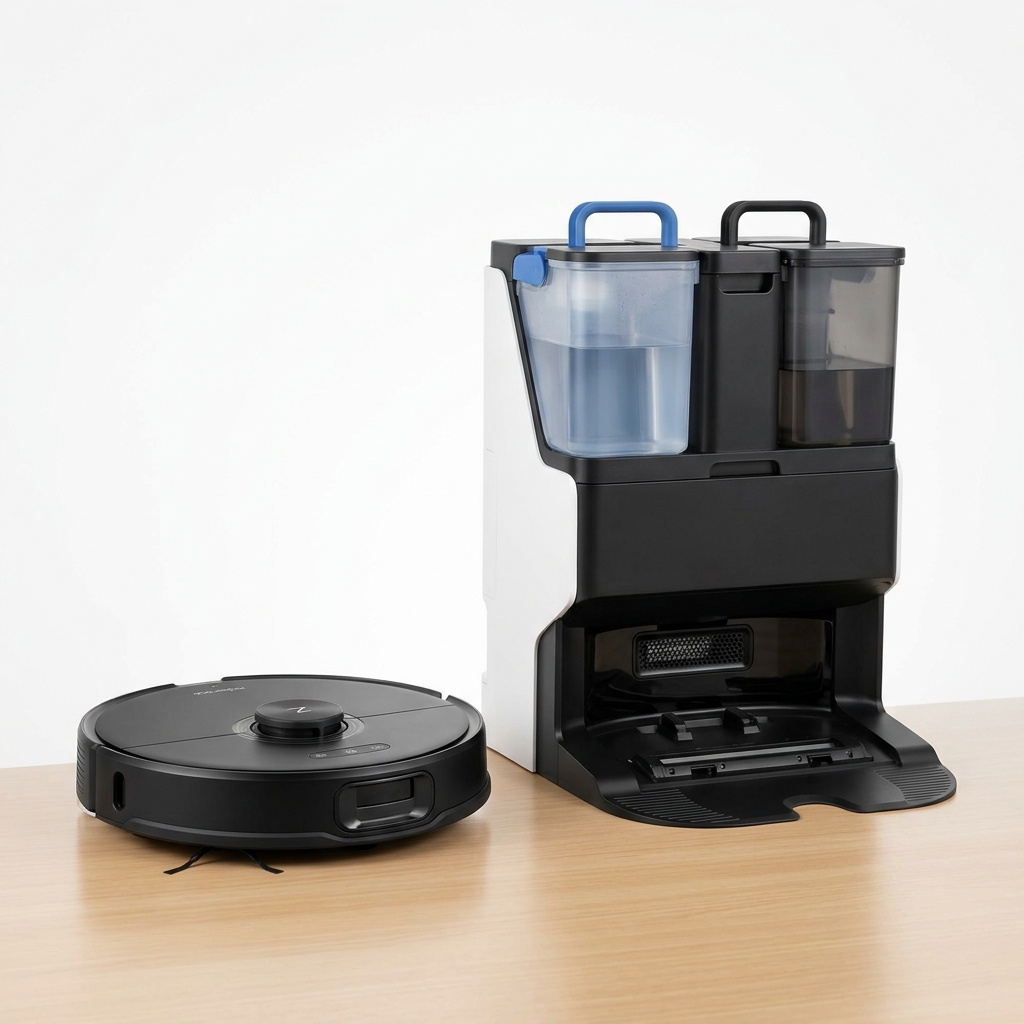
Premium Robot Vacuum with Auto Mop Washing Dock
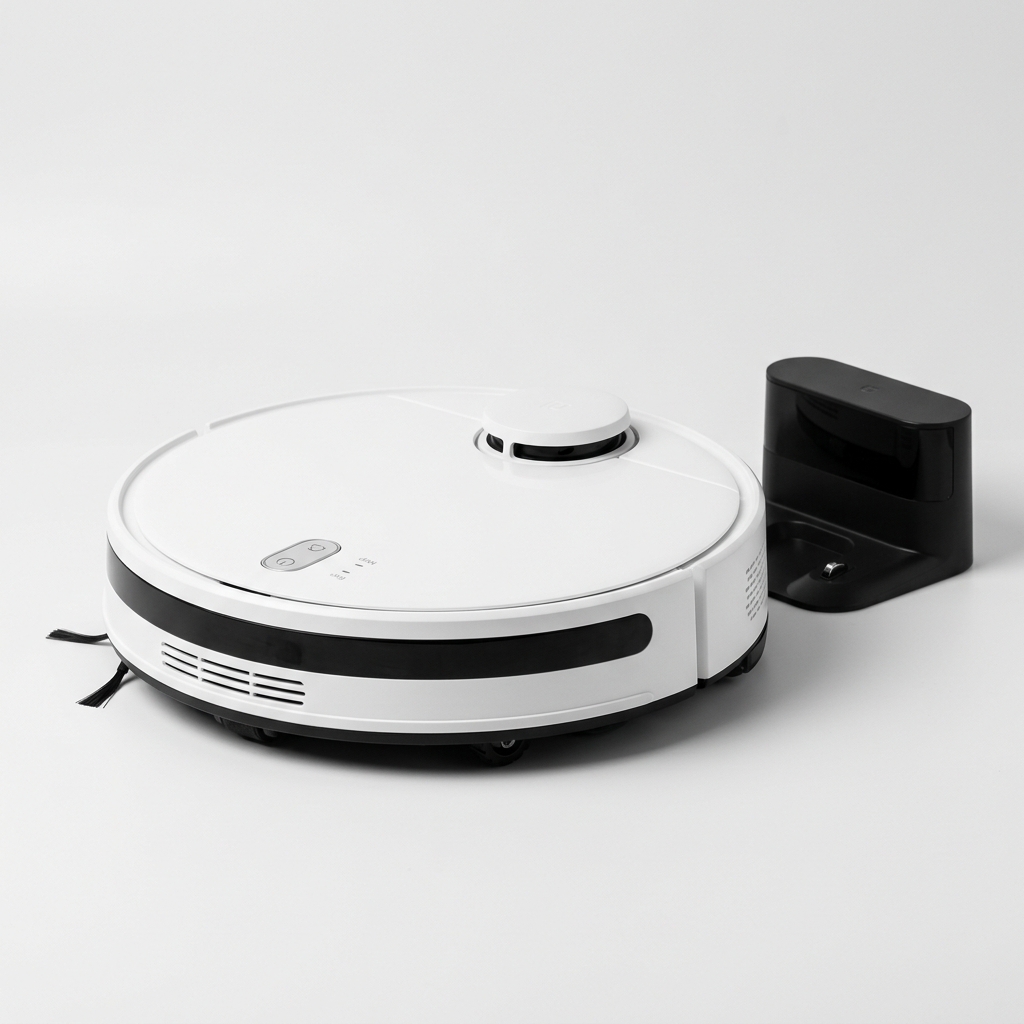
Affordable Robot Vacuum with 5200mAh Battery & LDS Navigation
Our comprehensive guide to the best robot vacuum cleaners available in India in 2026. Expert picks for every budget.
Buying GuidePractical framework for choosing a robot vacuum in India: floor types, home size, budget, must-have features, navigation, and maintenance.
GuideLearn how LiDAR navigation works in robot vacuums, its advantages over camera and gyroscope systems, and why it matters for Indian homes.
Compare top-rated models side by side and pick the best one for your home and budget.