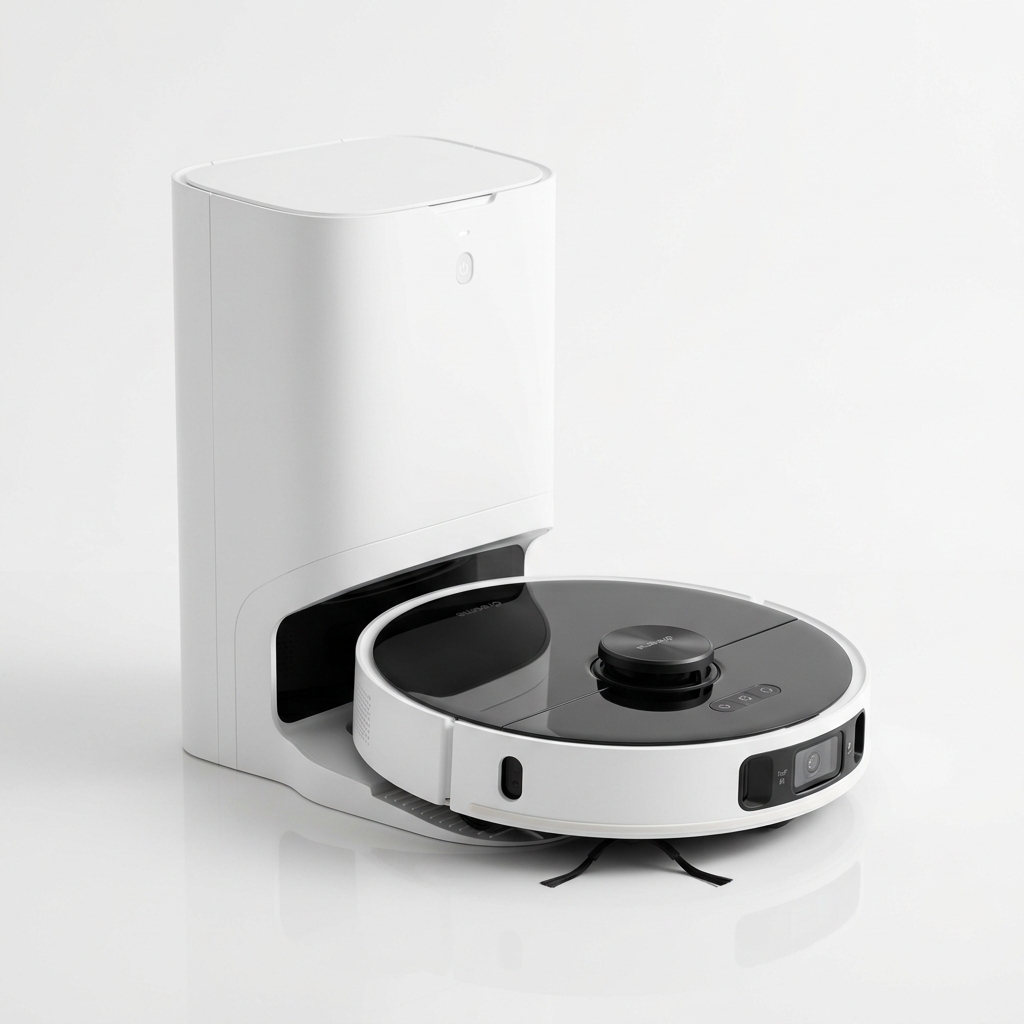
Dreame
★ 4.6
Dreame D10 Plus Gen 2
Best Value Robot Vacuum with 6000Pa Suction
₹27,999
90-Day Self-Emptying (4L Bag)
6000Pa Vormax Suction
LiDAR Navigation
Cost-benefit analysis of robot vacuums in India: price ranges, time savings, cleaning quality, maintenance costs, and who benefits most.
Robot vacuum cleaners have become increasingly popular in Indian households over the past few years. With prices ranging from around ₹10,000 to over ₹60,000, they represent a significant investment for most families. The question many Indian buyers ask is straightforward: is a robot vacuum cleaner worth it in India, or is it just another gadget that gathers dust after a few months?
The honest answer depends on your home setup, lifestyle, budget, and expectations. A robot vacuum excels at daily maintenance cleaning — keeping floors consistently dust-free between deeper manual sessions. It will not replace a traditional vacuum or a mop entirely, but it can reduce the frequency of manual cleaning by a noticeable margin. For some households, this time saving alone justifies the cost. For others, particularly those with very small homes or highly specific cleaning needs, the value proposition is weaker.
This assessment provides a detailed cost-benefit analysis so you can decide whether a robot vacuum is a worthwhile addition to your home. We look at price segments, time savings, cleaning quality, ongoing expenses, and real-world usage considerations specific to Indian homes. No marketing language, no exaggerated claims — just practical information to guide your decision.
Robot vacuums in India fall into broad price brackets, and the features vary considerably across them.
Entry Level (₹10,000 – ₹15,000): These are basic models with random or gyroscope navigation. Suction power ranges from 1500 to 2500 Pa. Mopping is typically gravity-fed and basic. Battery life is around 60–90 minutes. You get core functionality — scheduled cleaning, app control, and decent dust pickup on hard floors — but you sacrifice navigation efficiency, build quality, and advanced features like mapping or no-go zones. These are suitable for smaller apartments (1 BHK) or as a trial purchase to see if a robot vacuum fits your lifestyle.
Mid Range (₹15,000 – ₹30,000): This is the sweet spot for most Indian buyers. You get LiDAR navigation, reliable mapping, room-specific cleaning, and stronger suction (2500–4000 Pa). Mopping improves with electric water pumps. Battery life extends to 120–180 minutes. Many models at this level support voice assistants and offer good app experiences. The cleaning efficiency is significantly higher than entry-level models because the vacuum covers the floor methodically rather than randomly.
Premium (₹30,000 – ₹60,000+): Premium models add auto-empty docks, self-cleaning mopping pads, object avoidance using cameras or AI, and longer battery life. Suction can reach 5000+ Pa. These models require less hands-on involvement — you may only need to empty the dock once a month and refill water occasionally. They are better suited for larger homes (3 BHK and above) and households that want maximum automation.
The price you pay correlates most strongly with navigation quality and automation level, not necessarily with cleaning ability. Even an entry-level robot vacuum picks up dust effectively on hard floors. The difference is in how thoroughly and efficiently it covers the area, how much manual intervention is needed, and how long the machine lasts.
The primary benefit of a robot vacuum is time. Manual sweeping or vacuuming a standard 2 BHK Indian home takes roughly 20–40 minutes per session. If you clean floors three times a week, that is 1–2 hours weekly. Over a year, this adds up to 50–100 hours.
A robot vacuum running daily on a schedule reduces the need for manual cleaning to perhaps once a week or once every two weeks. The robot handles the daily dust accumulation — which is significant in most Indian cities due to open windows, construction dust, and high outdoor particulate levels.
Realistically, you save about 45 minutes to 1.5 hours per week if you let the robot vacuum handle daily maintenance. Over a year, that is roughly 40–75 hours. If you value your time at even a modest rate, the robot vacuum can pay for itself in a year or two purely in time recovered.
However, this assumes the robot vacuum works reliably in your home. If you have to constantly rescue it from cables, untangle brushes, or clean clogged sensors, the time savings diminish. Setup and occasional maintenance take maybe 10–15 minutes per week, which should be factored in.
A robot vacuum is not a substitute for a deep clean. Here is how it compares.
Dust and debris pickup on hard floors: Robot vacuums perform well on tiles, marble, vinyl, and hardwood. They pick up fine dust, hair, crumbs, and everyday debris effectively. The consistency of daily cleaning means there is less accumulated dust overall, which improves indoor air quality.
Carpet cleaning: On low-pile carpets and rugs, a robot vacuum with adequate suction (2500 Pa or more) does a reasonable job. High-pile carpets are challenging — most robot vacuums struggle to maintain suction through thick fibres and may not clean as deeply as a upright vacuum.
Mopping: Robot vacuum mops are designed for light damp mopping. They handle sticky residue or dried-on spills poorly. For Indian homes where chai spills, oil splatters in the kitchen, and muddy footprints are common, a robot mop is a supplement, not a replacement. You will still need to manual mop every few days, but less frequently.
Corners and edges: Most robot vacuums have a round or D-shape design. They cannot reach perfectly into corners. Some models include side brushes that flick debris toward the suction path, but manual touch-ups along edges and corners are occasionally needed.
Under furniture: This is where robot vacuums excel. They clean under beds, sofas, cabinets, and other furniture that is difficult to reach with a traditional vacuum. For many households, this alone makes the robot vacuum worthwhile because those areas would otherwise gather dust for weeks or months.
Overall, a robot vacuum maintains a baseline of cleanliness that is higher than what most households achieve with manual cleaning, simply because it runs more frequently. The peak cleanliness after a manual deep clean is better, but the average daily cleanliness is usually higher with a robot vacuum running daily.
Ownership costs go beyond the purchase price. Here is what to budget for annually.
Filters: HEPA or washable filters need replacement every 3–6 months depending on usage and air quality. A replacement filter costs ₹300–₹1,000 per piece. Washable filters last longer but eventually lose effectiveness and need replacing.
Side brushes and main brush: Side brushes wear down and should be replaced every 6–12 months. Cost: ₹200–₹600 per set. The main brush (roller) typically lasts 6–12 months and costs ₹500–₹1,500 depending on the model.
Battery: The lithium-ion battery degrades over time. After 2–3 years of regular use, you may notice reduced runtime. Replacement batteries cost ₹1,500–₹4,000. Some premium models have user-replaceable batteries; others require servicing.
Sensors and charging contacts: These require occasional cleaning but no cost. Dust on sensors can cause navigation issues, and dirty charging contacts may prevent proper docking.
Mopping cloths: Disposable or washable cloths are inexpensive (₹100–₹500 for a pack). Washable cloths reduce recurring costs.
Estimated annual maintenance cost: ₹1,500–₹4,000 for entry-level and mid-range models. Premium models with auto-empty docks add the cost of replacement dust bags (₹300–₹800 per bag, replaced every 1–2 months).
Over a 3-year ownership period, factor in ₹6,000–₹15,000 in maintenance and spare parts. This is modest compared to the time savings but should still be part of your cost calculation.
Several home-specific factors influence whether a robot vacuum is worth it.
Floor type: Robot vacuums work best on hard floors (tiles, marble, vitrified). If your home is predominantly carpeted with medium or high-pile carpets, value decreases because cleaning effectiveness drops.
Home size: In homes under 500 sq ft (compact 1 BHK), the time saved is minimal — a manual sweep takes 5–10 minutes. Value increases with home size. The sweet spot is 800–1500 sq ft (typical 2–3 BHK), where manual cleaning takes significant time and the robot has enough space to operate efficiently.
Furniture clearance: If your furniture is low to the ground (less than 9 cm clearance), the robot vacuum cannot go underneath. Sofas with 6–7 cm legs are fine. Platform beds or floor-touching sofas reduce coverage area.
Floor clutter: Homes with many cables, clothes on the floor, children’s toys, or loose rugs will cause the robot vacuum to get stuck frequently. This reduces autonomy and increases frustration. If you are willing to pick up the floor before running the robot — which takes 1–2 minutes — this is manageable. If you expect the robot to navigate through clutter, it will not work well.
Multiple floors: Robot vacuums are designed for a single floor. Moving the robot and its charging dock between floors is inconvenient. If you need cleaning on multiple floors, you either move the dock (annoying) or buy multiple units (expensive).
Dust levels: Indian cities, particularly in North India and metro areas, have high dust levels. A robot vacuum running daily handles this well. In fact, high dust environments make robot vacuums more valuable because manual cleaning would need to happen daily to maintain the same level of cleanliness.
Pets: Pet hair is a strong use case. Robot vacuums pick up hair from floors daily, preventing it from accumulating on furniture or floating in the air. However, long pet hair can tangle in brushes, requiring regular cleaning.
Based on the factors above, the ideal candidate for a robot vacuum in India has:
For such households, a robot vacuum is almost certainly worth the investment. The combination of time savings, consistent cleanliness, and under-furniture cleaning provides tangible value.
A robot vacuum may not be worth it if:
None of these are deal-breakers by themselves, but combination of two or more of these factors reduces the value proposition significantly.
If you are still unsure, consider these approaches.
Start with a mid-range model from a brand with good service support. A model in the ₹18,000–₹25,000 range offers the best balance of features and reliability. If it does not work for your home after a week, check the return policy. Many online retailers offer replacement or return within 7–10 days.
Factor in the 6-month test. Most people who buy a robot vacuum use it consistently for the first 2–4 weeks, then usage patterns settle. If after a month you find yourself running it daily, it is worth it. If it sits idle, resell it.
Compare total cost of ownership. A ₹20,000 robot vacuum with ₹6,000 in maintenance over 3 years costs about ₹26,000 or roughly ₹720 per month. Compare this to the value of time saved (say, 1 hour per week at a modest rate) and decide what makes sense for you.
Check Price on Amazon to see current prices on models like the Xiaomi Mi Robot Vacuum Mop Pro. Reading recent buyer reviews from Indian buyers can also provide real-world insights specific to your city and home type.
Expecting perfection. Robot vacuums are not perfect. They miss corners, occasionally get stuck, and require maintenance. Going in with realistic expectations leads to higher satisfaction.
Buying based on suction power alone. Suction power matters less than navigation quality. A 2000 Pa robot with LiDAR navigation cleans more effectively than a 4000 Pa robot with random navigation.
Ignoring the service network. Brands with poor service coverage in your city can turn a ₹20,000 purchase into a headache when something goes wrong. Check service availability before buying.
Assuming mopping replaces manual mopping. Robot mops maintain floors but do not deep clean. If your expectation is zero manual mopping, you will be disappointed.
Forgetting about furniture height. Measure your furniture clearance before buying. A robot vacuum needs at least 9 cm to pass underneath. Many Indian-style sofas and beds have lower clearance.
For a 1 BHK (under 500 sq ft), the time saved is modest — roughly 15–20 minutes per cleaning session. A robot vacuum can still be worth it if you value consistent daily cleaning and want to keep dust under control, but the cost-per-minute-saved ratio is less favourable than for larger homes.
A reliable robot vacuum with LiDAR navigation and good suction costs between ₹15,000 and ₹30,000. Entry-level models under ₹12,000 exist but have significant trade-offs in navigation and build quality.
Yes. Robot vacuums perform very well on tiles, marble, and vitrified floors. These smooth hard surfaces are ideal for both vacuuming and mopping functions.
With regular maintenance, a robot vacuum lasts 3–5 years. The battery is usually the first component to degrade significantly, typically after 2–3 years. Replacement batteries extend the lifespan.
Yes. In fact, robot vacuums are particularly useful in high-dust environments because they clean daily and prevent dust from settling deeply. Ensure the filter is cleaned or replaced regularly.
If you save 1 hour per week on cleaning and value that time at ₹200 per hour, the annual time value is about ₹10,400. Against a ₹20,000 purchase plus ₹2,000 annual maintenance, the payback period is roughly 2–2.5 years.
Most robot vacuums can handle thresholds up to 1.5–2 cm. Some models handle up to 2.5 cm. If your home has multiple rooms with raised thresholds, check the specified clearance before buying.
Robot mopping is effective for light maintenance — removing fine dust and light stains. It does not handle heavy stains, dried spills, or oil. Plan to manual mop every 4–7 days depending on your home.
Most robot vacuums automatically return to the charging dock when the battery is low. Many models also support resume cleaning, where they continue from where they left off after recharging.
If your maid cleans floors daily, a robot vacuum may be redundant unless you want cleaning on days the maid is not there or you want to reduce the maid’s workload. Some households use both — the robot runs daily, and the maid does deeper cleaning weekly.
As an Amazon Associate I earn from qualifying purchases. If you make a purchase through these links, I may earn a small commission at no additional cost to you. Our recommendations are based on research and practical assessment, not on affiliate partnerships.
Affiliate Disclosure: As an Amazon Associate I earn from qualifying purchases. If you click on a link and make a purchase, I may earn a small commission at no extra cost to you.
Check the latest prices and reviews on Amazon India.
Best Value Robot Vacuum with 6000Pa Suction
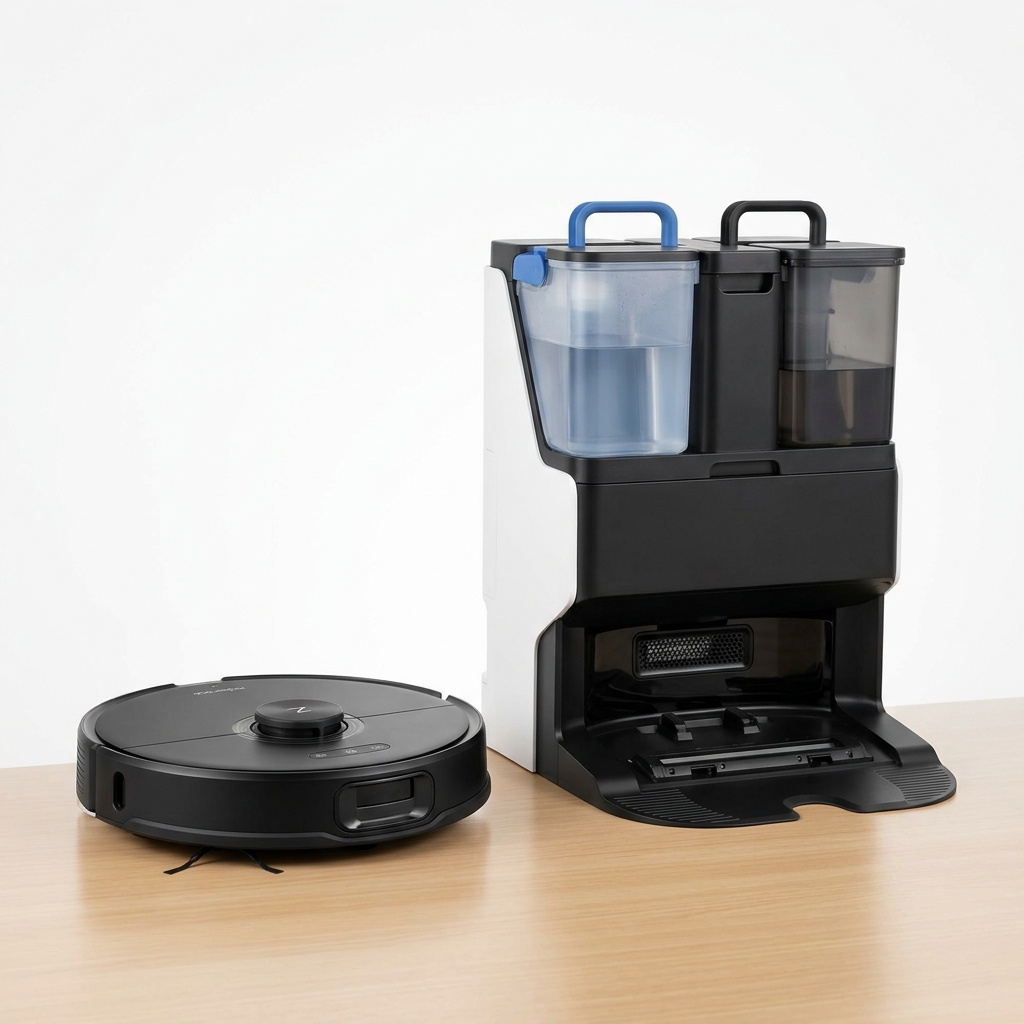
Premium Robot Vacuum with Auto Mop Washing Dock
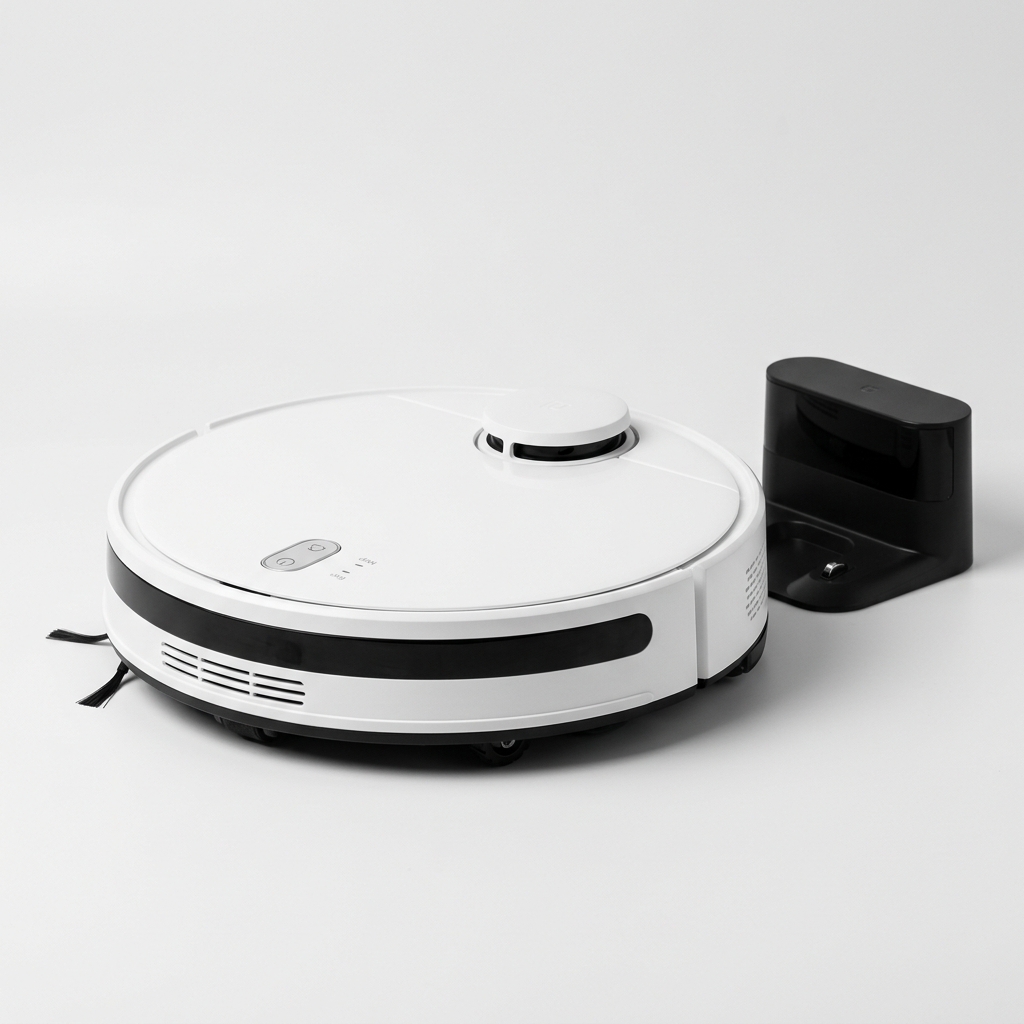
Affordable Robot Vacuum with 5200mAh Battery & LDS Navigation
Our comprehensive guide to the best robot vacuum cleaners available in India in 2026. Expert picks for every budget.
Buying GuidePractical framework for choosing a robot vacuum in India: floor types, home size, budget, must-have features, navigation, and maintenance.
GuideLearn how LiDAR navigation works in robot vacuums, its advantages over camera and gyroscope systems, and why it matters for Indian homes.
Compare top-rated models side by side and pick the best one for your home and budget.