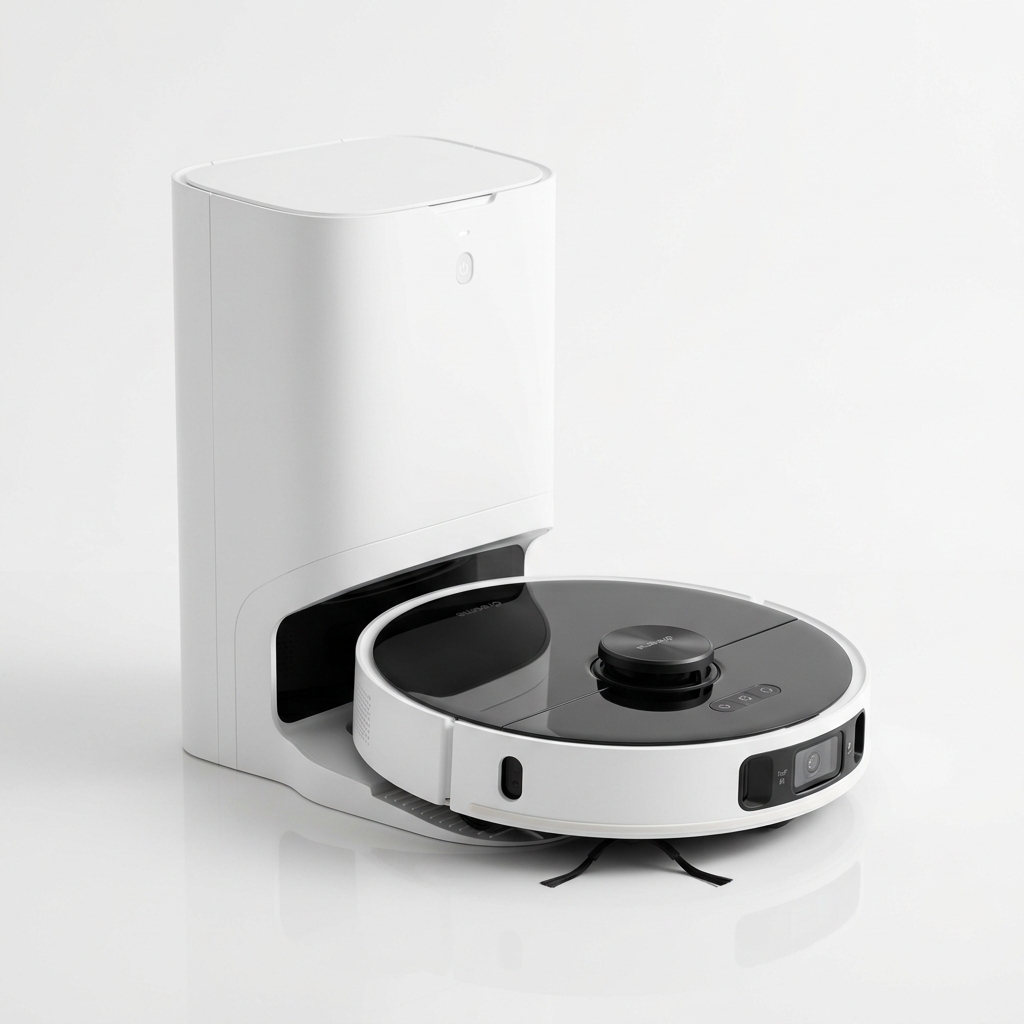
Dreame
★ 4.6
Dreame D10 Plus Gen 2
Best Value Robot Vacuum with 6000Pa Suction
₹27,999
90-Day Self-Emptying (4L Bag)
6000Pa Vormax Suction
LiDAR Navigation
Robot vacuum vs cordless stick vacuum — which is right for Indian homes? Compare cleaning performance, convenience, cost, and maintenance in detail.
If you are shopping for a new cleaning appliance in 2026, two categories dominate the conversation: robot vacuums and cordless stick vacuums. Both offer cord-free operation, both have improved significantly in suction and battery life, and both appeal to Indian households looking to reduce the effort of daily cleaning. But they serve fundamentally different use cases. A robot vacuum is an autonomous device designed for daily maintenance cleaning — it runs on its own schedule and keeps floors consistently dust-free with minimal human effort. A cordless stick vacuum is a manual tool that requires you to push it, but it offers more powerful spot cleaning, reaches furniture, cars, and curtains, and handles deep cleaning sessions on weekends. This comparison looks at the trade-offs in cleaning performance, convenience, long-term cost, and suitability for Indian homes. We present the facts without declaring one “better” — the right choice depends on your home, your habits, and your budget.
Robot vacuum. An autonomous device that navigates your home using LiDAR (laser) or gyroscope sensors. You set a schedule via an app, and it cleans floors without supervision. It returns to its charging dock when the battery is low or when cleaning is complete. Most models in 2026 support LiDAR navigation even at mid-range prices (₹20,000+), offering efficient room-by-room cleaning, no-go zones, and multi-floor mapping.
Cordless stick vacuum. A handheld stick vacuum powered by a rechargeable battery. You guide it manually across floors, carpets, and upholstery. Most come with multiple attachments — crevice tool, brush tool, motorised carpet head — for different surfaces. Popular brands in India include Dyson, Xiaomi (Dreame handhelds), Philips, and Karcher. Battery runtime ranges from 20–60 minutes depending on power mode.
For daily dust and hair pickup on hard floors (tiles, marble, vinyl, wood), both devices perform adequately. A robot vacuum with LiDAR navigation cleans systematically — row by row — and does not miss spots on open floors. A cordless stick vacuum depends on the user’s thoroughness — a quick pass may leave corners untouched.
Edge cleaning is a differentiator. Robot vacuums use side brushes to sweep debris from edges toward the main suction path. On stick vacuums, you manually angle the head to reach edges. Stick vacuums generally do a better job on edges because you control the approach.
Advantage: Tie, with a slight edge to robot vacuums for unattended daily maintenance and to stick vacuums for visible edge dirt.
Stick vacuums have a clear advantage on carpets. The motorised brush head agitates carpet fibres directly, lifting embedded dust and pet hair. Most robot vacuums, even with strong suction (4000+ Pa), rely on passive brush contact and are less effective at deep carpet cleaning, especially on high-pile or thick Indian dhurries.
For low-pile carpets and doormats, a robot vacuum with 4000+ Pa and a rubber brush works well. For wall-to-wall carpeting or thick rugs, a cordless stick vacuum is more effective.
Advantage: Cordless stick vacuum.
If you spill a bowl of rice or knock over a plant pot, a stick vacuum lets you clean the spot immediately in seconds. A robot vacuum would need to be carried to the spot, started manually, and may not target the area efficiently if its map is set to avoid that zone.
Advantage: Cordless stick vacuum.
Robot vacuums have a low profile (typically 9–10 cm tall) and can slide under beds, sofas, and sideboards without moving furniture. Stick vacuums with a long wand can reach under some furniture, but you need to bend or kneel to angle the head properly.
Advantage: Robot vacuum for low-clearance spaces; stick vacuum for crevices between cushions and narrow gaps (with attachments).
The primary value proposition of a robot vacuum is effortlessness. You set it to run daily at 10 AM while you are at work. Floors are cleaned when you return. Over a month, this saves hours of manual cleaning time.
A cordless stick vacuum requires active effort — you have to pick it up, push it across the floor, and put it back on the charger. It takes 15–30 minutes per cleaning session depending on home size. For many people, this is still less effort than a traditional corded vacuum, but it is not zero-effort.
Advantage: Robot vacuum.
Robot vacuums offer full scheduling via app — per-room, per-day, specific suction modes. Stick vacuums have no scheduling. You clean when you have time and remember to charge the battery.
Advantage: Robot vacuum.
Stick vacuums excel here. With a quick detachment of the wand, they convert to a handheld unit for sofas, car interiors, curtains, and ceiling corners. Robot vacuums cannot clean above floor level. If you want a single device for both floors and furniture, a stick vacuum is more versatile.
Advantage: Cordless stick vacuum.
Robot vacuums operate at 55–70 dB depending on suction mode. Cordless stick vacuums are generally louder — 65–80 dB on max mode — because the motor is larger and the air path is shorter. If noise sensitivity is a concern, robot vacuums running on quiet mode are less intrusive.
Advantage: Robot vacuum (on quiet mode).
Entry-level robot vacuum: ₹11,000–₹18,000 (basic gyroscope, 2000–3000 Pa)
Mid-range robot vacuum: ₹20,000–₹30,000 (LiDAR, 4000+ Pa, optional auto-empty dock)
Premium robot vacuum: ₹35,000–₹70,000 (AI obstacle avoidance, self-cleaning dock)
Entry-level cordless stick vacuum: ₹5,000–₹12,000 (Xiaomi, Philips, Inalsa)
Mid-range cordless stick vacuum: ₹15,000–₹30,000 (Dyson V8/V12, Dreame T series)
Premium cordless stick vacuum: ₹35,000–₹60,000 (Dyson V15, Samsung Jet Pro)
Robot vacuums have a higher entry price. A decent LiDAR robot vacuum costs at least ₹20,000. A decent cordless stick vacuum costs ₹8,000–₹15,000.
Robot vacuum:
Cordless stick vacuum:
Long-term running costs are comparable. Robot vacuums tend to have more consumable parts (side brushes, sensors that may need cleaning), but battery replacement is generally cheaper than for premium stick vacuums.
Advantage: Cordless stick vacuum has a lower purchase price. Robot vacuum saves more time but costs more upfront.
A robot vacuum is ideal. The floor area is small enough that a single charge covers the entire home for days. The vacuum can run while you are out. No need to store a stick vacuum in limited cupboard space.
A stick vacuum works too, but you need to find storage space (even wall-mounted holders take up wall area) and remember to charge it.
Recommendation: Robot vacuum for convenience; stick vacuum if budget is under ₹10,000.
Either option works. A robot vacuum with LiDAR navigation handles this size efficiently. A cordless stick vacuum with 40+ minute runtime also covers the area in one session.
Recommendation: Depends on whether you want automation (robot) or versatility (stick).
A single robot vacuum may struggle with battery and dustbin capacity unless it supports recharge-and-resume and has an auto-empty dock. You may need a higher-end model.
A cordless stick vacuum will handle the area, but cleaning the entire home in one session requires a model with 50+ minutes of runtime, which typically costs ₹20,000 or more.
Recommendation: Consider both — a robot vacuum for daily maintenance and a stick vacuum for weekly deep cleaning.
Robot vacuums are beneficial for elderly users or anyone with limited mobility — no pushing, no bending to plug in, no carrying up and down stairs. Stick vacuums require physical effort and may not be suitable.
Recommendation: Robot vacuum.
A robot vacuum running daily handles automatic pet hair removal. But a stick vacuum is better for cleaning hair from pet beds, sofas, and car seats. Many pet owners use both.
Recommendation: Both, starting with a robot vacuum for daily floors and a budget stick vacuum for furniture.
Pros:
Cons:
Pros:
Cons:
Choose a robot vacuum if:
Choose a cordless stick vacuum if:
Consider buying both if:
Buying a robot vacuum thinking it replaces all cleaning. Robot vacuums maintain floors but do not deep-clean carpets, reach elevated surfaces, or handle heavy messes. Most users still need a manual vacuum for occasional deep cleaning.
Buying a stick vacuum thinking it saves as much time. A stick vacuum still requires active effort every time you clean. If your goal is to reduce daily chore time, a robot vacuum is the more effective choice.
Ignoring home layout for robot vacuums. Homes with many room dividers, high thresholds, or lots of floor clutter reduce the effectiveness of a robot vacuum. Consider whether your home layout suits autonomous cleaning.
Buying based on wattage or suction numbers alone. A stick vacuum with 400W advertised power and a poorly designed brush head may perform worse than a 250W model with a well-engineered brush. Real-world reviews matter more than spec sheets.
Assuming all cordless stick vacuums have the same runtime. Battery runtime varies significantly — from under 20 minutes on max mode to 60 minutes on eco mode. Check runtime at the power level you intend to use.
Not measuring charging dock space. Robot vacuum docks require 50–100 cm of clearance on each side and in front. Stick vacuum wall mounts need wall space near a power outlet. Measure before purchasing.
Which is better for Indian homes — a robot vacuum or a cordless stick vacuum? There is no universal answer. For daily floors with minimal effort, a robot vacuum suits Indian tile-floor homes well. For versatility (floors + furniture + car), a cordless stick vacuum is better. Many households benefit from having both.
Is a robot vacuum worth the higher price? If you value time and want consistently clean floors without manual work, yes. If your budget is tight or you prefer hands-on cleaning, a cordless stick vacuum offers better value for money.
Can a robot vacuum replace a stick vacuum completely? No. Robot vacuums only clean floors. They cannot clean sofas, bed sheets, curtains, car interiors, or ceiling corners. A stick vacuum (or handheld vacuum) is still needed for those tasks.
Which is better for pet owners? A robot vacuum for daily floor hair removal, and a stick vacuum for pet beds, sofas, and car seats. If you must choose one and your pets shed heavily on floors, a robot vacuum is more useful for daily maintenance.
Are cordless stick vacuums good for large Indian homes? They work, but battery life is a constraint. For homes over 1,500 sq. ft., look for models with 50+ minutes of real-world runtime or a swappable battery. Premium Dyson and Dreame models offer this.
Do robot vacuums work on Indian marble and tile floors? Yes, they are well suited. Tile and marble do not trap dirt the way carpets do, so even moderate suction (2500–4000 Pa) is effective. Edge cleaning and corner reach vary by model.
Which is quieter — robot vacuum or stick vacuum? Robot vacuums are generally quieter, especially on standard or quiet mode (55–62 dB). Stick vacuums on max power can reach 75–80 dB. On low power, some stick vacuums are comparable.
How long does the battery last on each? Robot vacuums: 100–180 minutes on standard mode. Cordless stick vacuums: 15–60 minutes depending on power mode and brand.
Can I use a robot vacuum if I have curved or spiral stairs? Robot vacuums have cliff sensors that prevent them from falling down stairs. Curved or open staircases are not an issue. Do not use a robot vacuum on a staircase itself.
Which is cheaper to maintain long term? They are broadly comparable. Robot vacuums have more disposable parts (side brushes, main brush, filter, dock bags) but lower battery replacement costs. Stick vacuums have fewer parts but premium replacements (Dyson batteries, for example) are expensive.
Is mopping available on both types? Robot vacuums often include an integrated mopping function (water tank + cloth pad). Cordless stick vacuums generally do not mop — some models have a separate wet attachment, but it is uncommon.
Should I buy both? If your budget permits and you want thorough cleaning coverage, yes. A robot vacuum handles the daily floor cleaning automatically, and a stick vacuum covers furniture, spot cleaning, and deep carpet sessions. Many households find this combination ideal.
Ready to buy? Check Price on Amazon for a capable robot vacuum like the Dreame D10 Plus Gen 2, or check cordless stick vacuum prices for manual cleaning options.
Internal Linking Suggestions:
Affiliate Disclosure: As an Amazon Associate I earn from qualifying purchases. If you choose to purchase a product through these links, I may earn a small commission at no additional cost to you.
Affiliate Disclosure: As an Amazon Associate I earn from qualifying purchases. If you click on a link and make a purchase, I may earn a small commission at no extra cost to you.
Check the latest prices and reviews on Amazon India.
Best Value Robot Vacuum with 6000Pa Suction
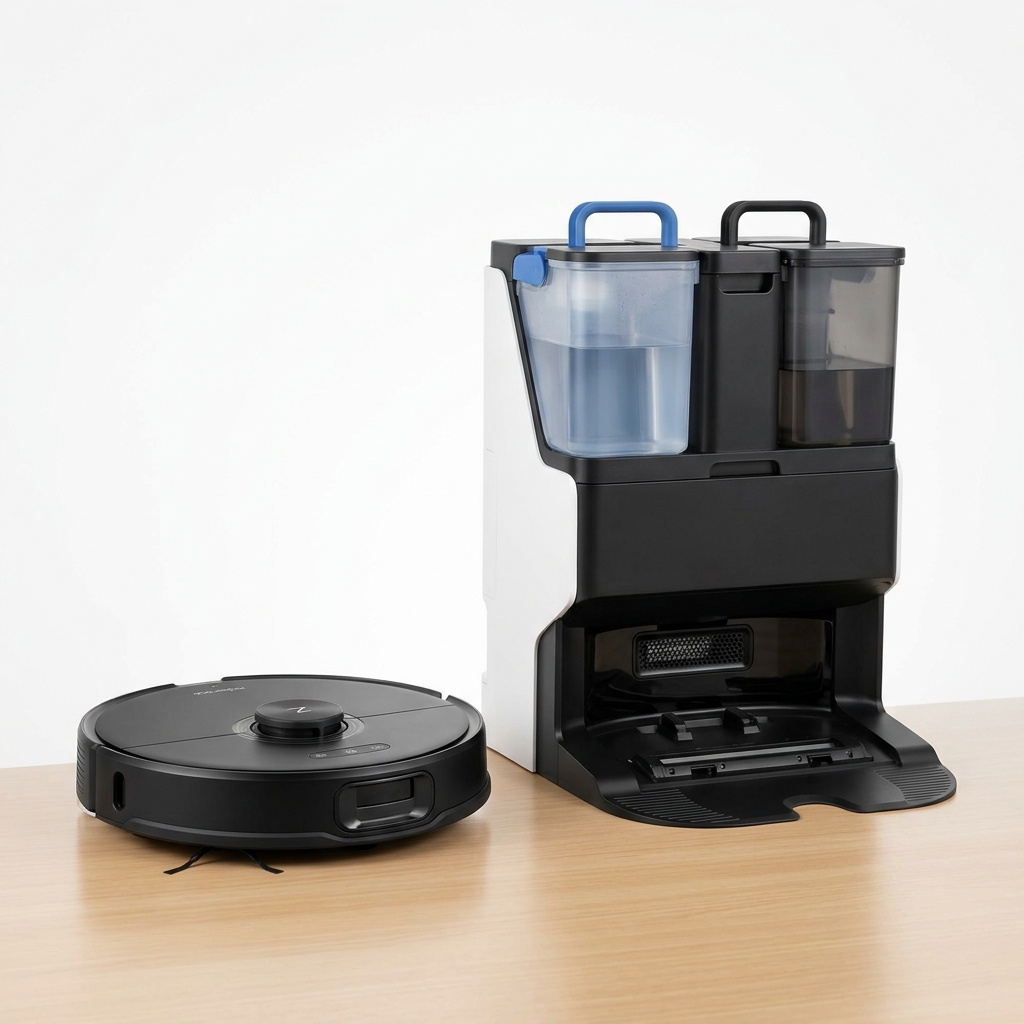
Premium Robot Vacuum with Auto Mop Washing Dock
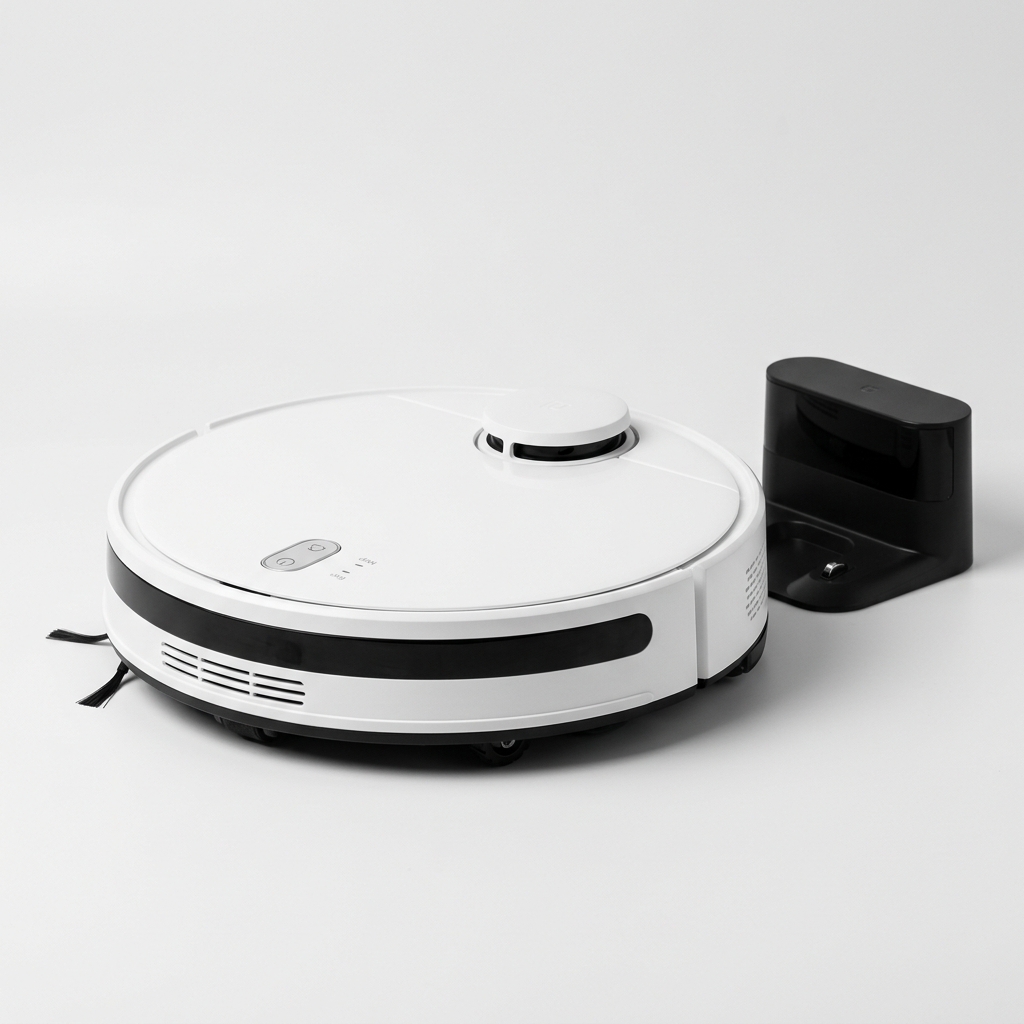
Affordable Robot Vacuum with 5200mAh Battery & LDS Navigation
Our comprehensive guide to the best robot vacuum cleaners available in India in 2026. Expert picks for every budget.
Buying GuidePractical framework for choosing a robot vacuum in India: floor types, home size, budget, must-have features, navigation, and maintenance.
GuideLearn how LiDAR navigation works in robot vacuums, its advantages over camera and gyroscope systems, and why it matters for Indian homes.
Compare top-rated models side by side and pick the best one for your home and budget.